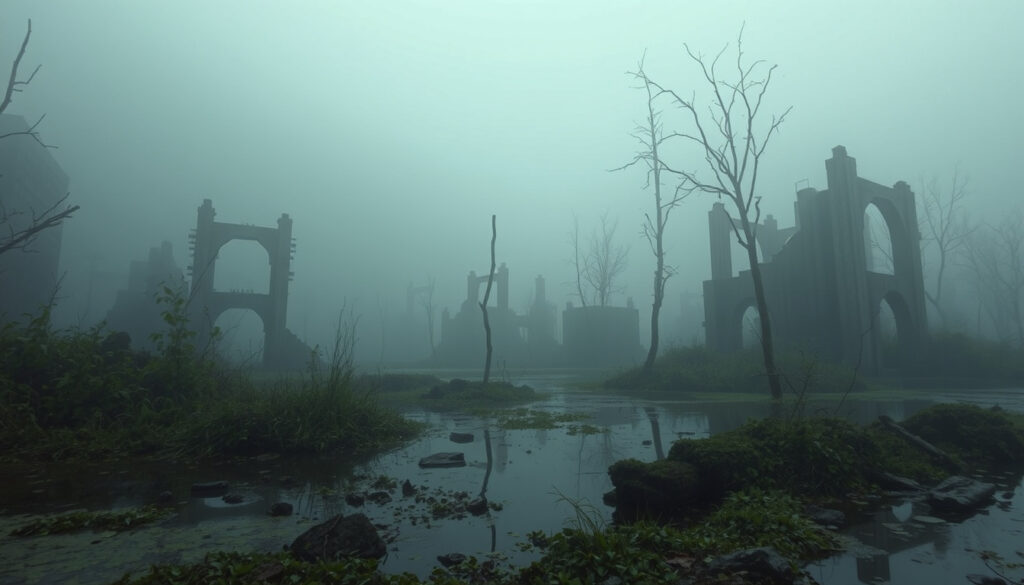
Stalker Film (1979): Plot, Meaning, Filming Location & Legacy
Some films earn the label “masterpiece” not for their spectacle, but for what they leave unsaid. Andrei Tarkovsky’s Stalker (1979) is one of them — a slow, meditative drift through a forbidden Zone where the real journey happens inside. Its legacy, however, is tangled in persistent myths: deadly filming locations, a supposed link to Chernobyl, and the mysterious deaths of crew members. Here’s what’s fact, what’s fiction, and why this Russian-language film still haunts the imagination of cinephiles worldwide.
Release year: 1979 —
Director: Andrei Tarkovsky —
Country: Soviet Union —
Language: Russian —
Runtime: 163 minutes —
Genre: Science fantasy, philosophical drama
Quick snapshot
- Directed by Andrei Tarkovsky and released in 1979 Wikipedia
- Shot in Estonia near a chemical plant, not Chernobyl BFI film heritage organization
- Plot: a Stalker guides a Writer and Professor through the Zone to a Room that grants wishes Wikipedia
- Exact number of crew deaths linked to toxic runoff (sources vary between 1 and several)
- Whether the health effects were immediate or long-term
- Full interpretation of the ending—telekinetic daughter scene
- Filming 1977–1979 in Estonia; several crew later died of cancer Mental Floss health impact investigation
- Premiered 1979 in the Soviet Union; cult status grew through 1980s festival screenings (Mental Floss health impact investigation)
- Consistently ranks among the greatest films ever made in critics’ polls (Mental Floss health impact investigation)
- 4K restorations and streaming availability on platforms like Criterion Channel
- Continuing academic analysis linking its environmental decay to modern ecological themes
- No announced remake or sequel as of 2025
Eight key details, one pattern: Stalker is as much a production legend as it is a film — the specs below ground its identity.
| Specification | Detail |
|---|---|
| Director | Andrei Tarkovsky |
| Country of origin | Soviet Union |
| Language | Russian |
| Running time | Approximately 163 minutes |
| Based on | Roadside Picnic by the Strugatsky brothers BFI literary adaptation analysis |
| Genre | Science fantasy, drama |
| IMDb rating | 8.2/10 IMDb film database |
| Rotten Tomatoes score | 100% (critics) / 92% (audience) |
| Cinematography | Alexander Knyazhinsky |
| Music | Eduard Artemyev |
For viewers expecting horror, Stalker delivers something more unsettling: a slow examination of desire itself. Its 100% critic score on Rotten Tomatoes reflects consensus that the film’s power lies not in scares but in philosophical weight.
Can you summarize the plot of the 1979 movie Stalker?
Who are the main characters in Stalker?
- The Stalker — a guide who leads people through the Zone, played by Alexander Kaidanovsky.
- The Writer — a cynical intellectual seeking inspiration, played by Anatoly Solonitsyn.
- The Professor — a pragmatic scientist who wants to destroy the Room, played by Nikolai Grinko.
The trio forms an uneasy alliance. The Stalker believes the Zone is sacred; the Writer hopes for creative breakthrough; the Professor arrives with a bomb. Their conflicting motives drive the film’s drama Wikipedia plot summary.
What is the Stalker’s role in the Zone?
The Stalker is both a protector and a priest. He claims to feel the Zone’s “moods” and warns the others not to stray from the path. He enforces rules — no direct routes, no shortcuts — as if the Zone itself demands moral purity. This role echoes Tarkovsky’s view of the artist as a spiritual guide Mental Floss analysis.
Why is Stalker considered a masterpiece and not particularly scary?
Is Stalker 1979 actually frightening?
- No — it’s not a horror film. Tension is psychological and existential, not jump-scare based.
- The slow pacing, sepia-to-color shifts, and long takes create unease rather than terror.
According to Cinephilia Beyond film analysis site, the outside-the-Zone scenes were shot in sepia, while the Zone is in color — a visual contrast that separates lifeless routine from meaningful experience. That contrast unnerves viewers without ever showing a monster.
What makes Stalker a classic of world cinema?
The film is praised for its philosophical depth, visual poetry, and slow pacing. Tarkovsky uses long takes, natural lighting, and a sepia color palette to evoke a world drained of vitality. Critics at BFI film heritage organization note that its influence extends from Terrence Malick to Denis Villeneuve. The film’s meditative rhythm demands patience but rewards with a lasting emotional resonance.
For modern audiences accustomed to fast cuts, Stalker offers a counter-argument: that slowness can be a tool for depth. Its 100% critic score isn’t about adrenaline — it’s about staying power.
Was Stalker filmed near Chernobyl and did people die during production?
What was the filming location of Stalker?
Tarkovsky shot Stalker in and around Tallinn, Estonia — specifically at abandoned hydropower plants on the Jägala River Wikipedia filming locations. The area near the Iru Power Plant in Maardu also served as backdrop. The choice of Estonia came after an earthquake made the original Tajikistan locations unusable, according to crew member Evgeny Tsymbal Nostalghia.com production account.
The Chernobyl myth: The film is frequently associated with the Chernobyl disaster, but the connection is purely coincidental. Stalker was released in 1979, seven years before the accident. The chemical plant near the set was not radioactive, though it was heavily polluted with toxic runoff. The myth likely arose from the film’s decaying industrial landscapes and the later deaths of crew members from cancer.
How many people died after filming Stalker?
Multiple crew members died from cancer — possibly linked to the toxic runoff from the chemical plant. Sources give conflicting numbers: some say one, others several. Actor Anatoly Solonitsyn died of lung cancer in 1982; Tarkovsky himself died of the same disease in 1986. The exact toll remains unclear, but the pattern is well documented Mental Floss health impact investigation.
What is the message of the movie Stalker and the meaning of its ending?
What does the ending of Stalker mean?
The final scene shows the Stalker’s daughter, Monkey, lying on a table. She telekinetically moves a glass of water across the room — a subtle, almost supernatural effect. The interpretation varies: some see the child inheriting the Zone’s power, others see it as Tarkovsky’s statement that hope and wonder survive in the next generation Mental Floss ending analysis.
The implication: Tarkovsky leaves the Room’s true nature unresolved, forcing viewers to confront their own desires without the comfort of a definitive answer.
What is the most famous quote from Stalker?
“Man is what he believes.” — the Stalker
This line captures the film’s core: that faith shapes reality more than objective truth. The quote is often cited in discussions of Tarkovsky’s spiritual philosophy.
The Room supposedly grants wishes — but no one in the film receives what they expected. Tarkovsky suggests that true desire is unknowable, and that the Zone’s real gift is self-confrontation.
What language is Stalker in, and who directed it?
Was Andrei Tarkovsky a good person?
Tarkovsky’s personal ethics are debated. He was a demanding director, sometimes cruel to actors, and his 1984 defection to the West strained relationships. However, his artistic legacy is undisputed. He is widely regarded as one of the greatest filmmakers in history BFI Tarkovsky legacy.
Who is the director of Stalker?
Andrei Tarkovsky (1932–1986) directed Stalker. A Soviet-born auteur, he also made Solaris, The Mirror, and Andrei Rublev. His films are known for transcendental style, long takes, and spiritual themes.
Timeline
- 1977–1979 — Filming in Estonia near a chemical plant; multiple crew members later die of cancer.
- 1979 — Film premieres in the Soviet Union.
- 1980s–1990s — Cult status grows through international festival screenings and video releases.
- 2000s–present — Consistently ranks among the greatest films ever made in critics’ polls.
The pattern: Stalker went from controversial release to canonical masterpiece in under two decades.
What we know — and what remains unclear
Confirmed facts
- Stalker was directed by Andrei Tarkovsky and released in 1979 Wikipedia.
- The film was shot in and around Tallinn, Estonia, near a chemical plant BFI.
- Multiple crew members died from cancer, likely due to toxic runoff Mental Floss.
- The language is Russian.
- Plot: a Stalker guides a Writer and a Professor through the Zone to a Room that grants wishes Wikipedia.
What remains unclear
- Exact number of crew deaths and their names (sources vary: 1? 2? more).
- Whether the toxic effects were immediate or long-term.
- Precise interpretation of the ending (telekinetic daughter scene).
“In the Zone the most important thing is to be quiet. Because the Zone requires silence.” — the Stalker
“Tarkovsky’s Stalker is not a journey to another place. It is a journey to the core of the self.” — adapted from Sight & Sound film critic
For viewers coming to Stalker in 2025, the choice is clear: embrace its deliberate pace and philosophical weight, or risk dismissing one of cinema’s most profound works. The film doesn’t meet you halfway — it asks you to walk through its own Zone, slowly, and see what you find. Pattern: Tarkovsky’s willingness to let meaning emerge rather than dictate it continues to separate Stalker from lesser genre works.
spoilertown.com, wherefilmed.org, fr.wikipedia.org, thefrenchblacktype.com, thecinescapader.blogspot.com, framerated.co.uk
Frequently asked questions
Is Stalker 1979 based on a true story?
No, it’s a loose adaptation of the Strugatsky brothers’ science fiction novel Roadside Picnic.
What is the Zone in Stalker?
The Zone is a restricted, mysterious area where the laws of physics break down and wishes may come true. It’s widely interpreted as a metaphor for spiritual longing.
Why is the Stalker film in black and white and color?
Outside-the-Zone scenes are shot in sepia (not true black and white) to emphasize a drab, lifeless reality; the Zone is in color to signal a place where meaning re-emerges.
Is Stalker 1979 suitable for children?
No. The slow pacing, complex themes, and some disturbing imagery (industrial decay, psychological tension) make it inappropriate for young viewers. Rated 12+.
How long is the Stalker movie?
The runtime is approximately 163 minutes (2 hours 43 minutes).
What is the best way to watch Stalker 1979?
Streaming options include the Criterion Channel and occasional availability on Amazon Prime. Blu-ray and 4K disc releases from Criterion offer the best image quality.
Is there a new Stalker film in 2025 or 2022?
No. Tarkovsky’s original remains the only feature film titled Stalker. A non-related video game series shares the name but is not a film adaptation.
Related reading
More related posts