Cargo Meaning: Types, Examples, and Ship Terminology
The word “cargo” shows up everywhere—on shipping labels, in news headlines about global trade, and even in conversations about “cargo pants”—but what exactly does it mean? We unpack its many sides, from dictionary definitions to slang and classification systems used by air, sea, and road carriers.
Global seaborne cargo volume (2022): 11.97 billion tons (UNCTAD) ·
Share of global trade carried by sea: over 90% by volume (World Trade Organization) ·
Largest container ships capacity: over 24,000 TEUs ·
Cargo theft annual cost to logistics: $30–50 billion (TT Club) ·
Air cargo share of global trade by value: approximately 35% (IATA)
Quick snapshot
- Cargo definition from Cambridge Dictionary (authoritative English dictionary).
- Seaborne cargo volume data from UNCTAD (UN trade and development agency).
- Container ship capacity records from industry sources. (Cambridge Dictionary (authoritative English dictionary))
- Exact origin of slang usage of “cargo” for emotional baggage.
- Precise number of cargo types as classification varies by industry.
- Global seaborne cargo reached 11.97 billion tons in 2022 (UNCTAD), signaling steady growth in maritime trade.
- Continued digitization of logistics and expansion of containerization.
- Pressure on shipping lines to reduce carbon emissions.
The following table summarizes key facts about cargo and its classification.
| Label | Value |
|---|---|
| Definition | Goods carried by a ship, aircraft, or other large vehicle (Cambridge Dictionary). |
| Primary Types | General cargo, bulk cargo, neo-bulk, dangerous goods, perishable. |
| Largest Cargo Ship | Evergreen G-class: 23,992 TEUs capacity. |
| Air Cargo Value | 35% of global trade by value (IATA (global airline trade association)). |
| Cargo Theft | Annual loss $30–50 billion (TT Club (cargo insurance specialists)). |
What does “cargo” mean?
What is the dictionary definition of cargo?
The Cambridge Dictionary (authoritative English dictionary) defines cargo as “the goods carried by a ship, aircraft, or other large vehicle.” The word originates from the Spanish “cargar,” meaning to load. In everyday language, cargo can refer to any load or burden, not just commercial goods. But in logistics and trade, it carries a more precise meaning: any commodity transported from one place to another for commercial purposes.
How is cargo used in everyday language?
Outside shipping lanes, the word “cargo” pops up in phrases like “carrying emotional cargo” or the well-known garment “cargo pants,” which feature large pockets originally designed for carrying tools. In gaming communities, “cargo” often means loot or resources that a player collects. This casual usage blurs the line between formal classification and ordinary speech, but in a supply-chain context, cargo remains strictly professional.
The same word can mean dramatically different things in boardroom negotiations and casual conversation. For logistics professionals, precision is non-negotiable: calling something “cargo” implies it is part of a shipment with clear handling requirements.
This duality means that context determines whether you need a dictionary or a shipping contract.
What does “cargo” mean in slang?
In informal English, “cargo” often carries a metaphorical weight. People talk about “cargo” as emotional baggage—the personal history someone brings into a relationship. The term “cargo pants” refers to trousers with multiple pockets, originally designed for workers and military personnel who needed to carry tools and gear. In online gaming, “cargo” refers to virtual items or resources a player gathers. These uses are far removed from the legal and logistical definitions used in trade, yet they share the core idea of something that is carried.
When searching for “cargo” online, you’ll land on everything from fashion retailers to mental‑health blogs. Context matters more than ever.
The lesson: slang adds color, but logistics demands precision.
What are the different types of cargo?
What are the three main types of cargo?
Logistics experts often group cargo into three broad buckets: general cargo (breakbulk and containerized), bulk cargo (dry or liquid, unpackaged), and neo‑bulk cargo (cars, lumber, steel). This tripartite system helps carriers decide how to stow and handle goods.
What are the five types of cargo?
A more detailed classification includes:
- General cargo – non‑uniform goods (e.g., electronics, machinery) often packed in containers or crates.
- Bulk cargo – homogeneous, unpackaged material (grain, ore, coal for dry; oil, chemicals for liquid).
- Neo‑bulk cargo – distinct, countable items like vehicles or steel coils.
- Dangerous goods – hazmat requiring special labeling and handling (e.g., explosives, flammable liquids).
- Perishable cargo – temperature‑sensitive goods (food, flowers, pharmaceuticals).
Each type imposes different regulations. For example, the International Maritime Organization (IMO, UN maritime safety body) divides solid bulk cargo into groups based on hazards: Group A (liable to liquefy), Group B (chemical hazards), and Group C (neither).
What are some examples of cargo?
- Containerized: smartphones, clothing, furniture.
- Dry bulk: wheat, iron ore, cement.
- Liquid bulk: crude oil, liquefied natural gas (LNG), chemicals.
- Neo‑bulk: exported cars, timber, paper rolls.
- Dangerous: fireworks, radioactive material, corrosive acids.
- Perishable: bananas, cut flowers, vaccines.
What is classified as cargo?
Almost anything that can be transported counts as cargo—from a single parcel sent via courier to a shipload of steel. The IATA (global airline trade association) divides air cargo into general cargo (no special needs) and special cargo (requiring extra precautions, such as live animals or high‑value goods). Similarly, the Eurostat (EU statistical office) classifies maritime cargo into liquid bulk, dry bulk, containers, roll‑on/roll‑off, and other general cargo.
The pattern: classification systems overlap but never perfectly align. What matters is the regulation that applies to a specific shipment.
Getting the classification right is the first step in safe and efficient transport.
What is cargo on a ship called?
What is another word for “cargo ship”?
On a vessel, cargo is often called freight or shipment. The ship itself can be called a freighter, a cargo carrier, or a merchant vessel. Different types of cargo ships exist precisely because cargo varies so much. A tanker cannot carry grain in its tanks; a bulk carrier cannot handle palletized goods easily. The Eurostat maritime reference manual lists the same cargo categories that determine which ship design is used.
The implication: the name of the cargo on a ship is simply “cargo” or “freight,” but the ship’s name tells you what it carries.
What are 7 types of cargo ships?
The shipping industry has built specialized vessels for every major cargo category. Here are the seven most common:
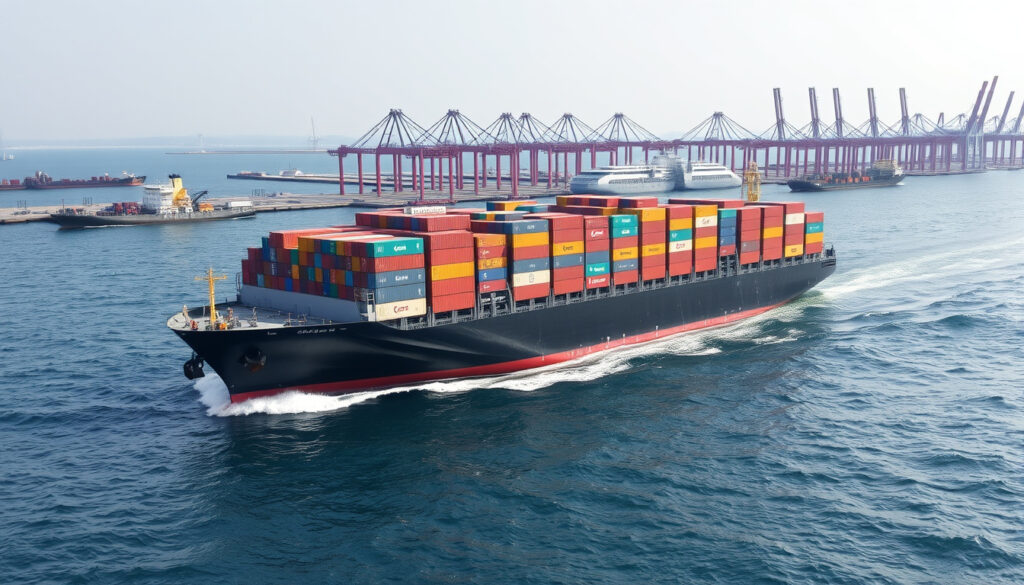
- Container ships – Carry standardized intermodal containers (capacity up to 24,000+ TEUs).
- Bulk carriers – Transport dry bulk like grain, ore, and coal in open holds.
- Tankers – For liquid bulk: oil, chemicals, and edible oils.
- Roll‑on/roll‑off (Ro‑Ro) ships – Vehicles drive on and off via ramps.
- LNG carriers – Cryogenic tanks for liquefied natural gas.
- Reefer ships – Refrigerated holds for perishable cargo.
- Heavy‑lift ships – Floating cranes and reinforced decks for oversized cargo (e.g., power plant components).
The IMO (UN maritime safety agency) oversees safety rules for all these types, including the carriage of solid bulk cargoes under the IMSBC Code and packaged dangerous goods under the IMDG Code.
Specialization improves safety and efficiency but reduces flexibility. A tanker cannot suddenly switch to carrying grain; a container ship cannot handle oversize machinery. Cargo and ship must match—or the journey ends at the port of mismanagement.
The takeaway: matching ship type to cargo is essential for safety and efficiency.
What is cargo called?
What is the name of the cargo?
In logistics, cargo is often referred to by several synonyms: freight, goods, merchandise, load, or shipment. In shipping documents, it is called a consignment. The term “cargo” itself is used universally across all modes of transport—air, sea, rail, and road.
The implication: regardless of the label, the core concept remains the same—goods in transit.
“The goods carried by a ship, aircraft, or other large vehicle.”
— Cambridge Dictionary (authoritative English dictionary)
“Global seaborne cargo volume reached 11.97 billion tons in 2022, underscoring the sheer scale of maritime trade.”
For logistics operators in the US and Europe, that 11.97‑billion‑ton number means one thing: supply chains run on cargo. Every delay, every classification error, every mismatch between ship and goods carries real financial consequences.
ec.europa.eu, imo.org, wwwcdn.imo.org, business.dme.ru, unescwa.org, wwwcdn.imo.org, imocompendium.imo.org
Frequently asked questions
Is cargo only for ships?
No. Cargo can travel by air, rail, road, or any mode of transport. The word applies to goods carried by any large vehicle, as Cambridge Dictionary makes clear.
What is the difference between cargo and freight?
In practice they are synonyms, but “freight” often refers to the payment for transport, while “cargo” describes the goods themselves. In everyday use, they are interchangeable.
How is cargo classified in logistics?
By physical form (bulk, container, breakbulk), by hazard class (dangerous goods), by temperature needs (perishable), and by transport mode (air, sea, road, rail). Major authorities like IATA and Eurostat publish their own classification frameworks.
What is dangerous cargo?
Any material that poses a risk during transport—explosives, flammable liquids, corrosives, radioactive substances. The IMO (UN maritime safety body) enforces the International Maritime Dangerous Goods (IMDG) Code.
What does cargo mean in the context of airlines?
Airlines distinguish “general cargo” (no special handling) from “special cargo” (e.g., live animals, high‑value goods). Air transport carries about 35% of global trade by value (IATA).
What is the origin of the word cargo?
It comes from the Spanish “cargar” (to load). The word entered English in the 17th century as ships carried goods between Spanish and English ports.
What does cargo mean in business?
In business, cargo is inventory in transit. It appears on balance sheets as “goods in transit” and is insured separately. For manufacturers and retailers, cargo represents billions of dollars in working capital.
Cargo is more than a word—it is the physical backbone of global trade. Whether you’re shipping containerized electronics across the Pacific or carrying emotional baggage into a new relationship, understanding what “cargo” really means can save you money, avoid regulatory headaches, and keep your supply chain running. For logistics professionals handling goods worth billions, the choice is clear: master the classifications, or risk your cargo sitting on the dock.
More related posts