Cast of A Bridge Too Far: Where Are They Now? Controversy & Facts
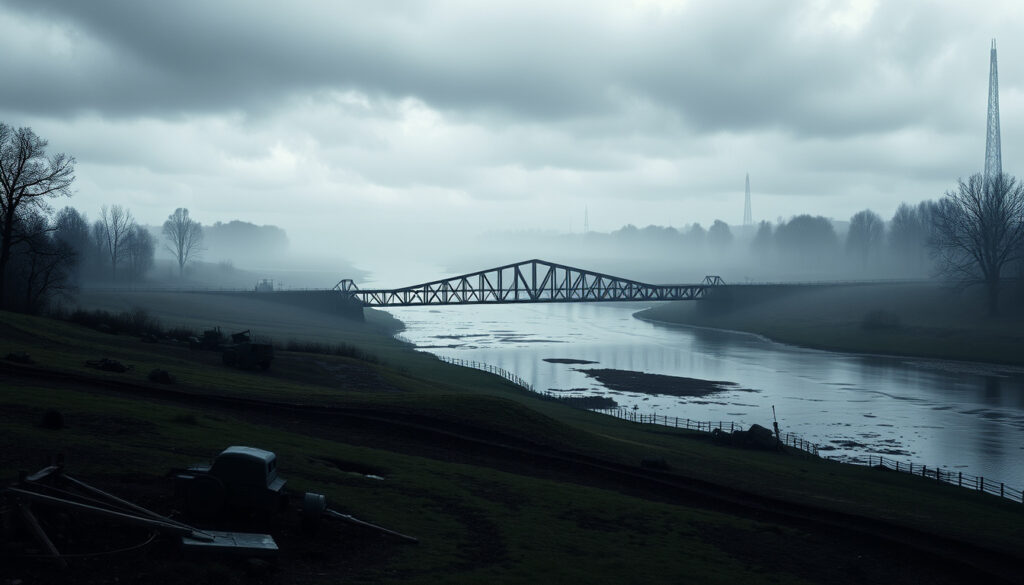
Few war films have ever assembled a cast quite like it – and fewer still sparked the kind of controversy that followed. A Bridge Too Far (1977) gathered fourteen stars including Sean Connery, Anthony Hopkins, and Robert Redford to tell the story of Operation Market Garden, a failed Allied offensive that became the stuff of military legend.
Release year: 1977 ⋅ Director: Richard Attenborough ⋅ Running time: 175 minutes ⋅ Budget: $25 million ⋅ Box office: $50.8 million ⋅ Cast size: over 40 named roles
Quick snapshot
- Based on Operation Market Garden, September 1944 (Commonwealth War Graves Commission (historical authority))
- Directed by Richard Attenborough (Wikipedia (film reference))
- 14 star actors in principal roles (IMDb (film credits database))
- Budget $25 million; box office $50.8 million (Wikipedia (film reference))
- Accuracy of each line of dialogue — much is fictionalized (Roger Ebert (film critic review))
- Whether the film shifted public opinion about NATO in the 1970s (Roger Ebert (film critic review))
- How many historical consultants the production actually used (Roger Ebert (film critic review))
- Whether deleted scenes would change the historical portrayal (Roger Ebert (film critic review))
- 17–26 Sep 1944: Operation Market Garden occurred (Commonwealth War Graves Commission (historical authority))
- 1974: Cornelius Ryan’s book published (Wikipedia (film reference))
- 1977: Film released (Wikipedia (film reference))
- 2020: Sean Connery died (YouTube video (secondary account))
- Fewer surviving cast members every year; Michael Caine and Anthony Hopkins still active
- Renewed interest in WWII historical accuracy in war film discourse
- Ongoing debates about Hollywood’s treatment of the Polish 1st Independent Parachute Brigade
Was A Bridge Too Far based on a true story?
Yes — the film is a dramatized account of Operation Market Garden, the Allied plan in September 1944 to capture a series of bridges in the Netherlands and open a path into Germany. The operation failed, leading to heavy casualties. The film draws directly from Cornelius Ryan’s 1974 book of the same name, which was based on hundreds of interviews with survivors (Wikipedia (film reference)).
- Operation lasted 9 days: 17–26 September 1944 (Commonwealth War Graves Commission (historical authority))
- The Allies aimed to secure bridges at Eindhoven, Nijmegen, and Arnhem
- The British 1st Airborne Division was surrounded and destroyed at Arnhem
- Over 17,000 Allied casualties were sustained (War History Online (military history outlet))
The film compresses a complex, nine-day military disaster into a digestible narrative. But compression means simplification: many tactical nuances and individual decisions are lost, creating a version that feels definitive yet isn’t.
What this means: Viewers get the broad outline right — the bridges, the paratroopers, the failure — but the film’s version is a Hollywood-shaped story, not a historical document.
How historically accurate is the movie A Bridge Too Far?
Reactions from historians, veterans, and critics have been mixed. The film gets the big picture right but takes significant liberties with characters, dialogue, and specific events. Below are the major areas of dispute.
Six key deviations, one pattern: the filmmakers chose drama over strict accuracy in almost every case where a trade-off existed.
| Disputed element | Film portrayal | Historical record |
|---|---|---|
| General Browning (Dirk Bogarde) | Arrogant, dismissive of risks | Browning did express doubts, but was not the caricature shown (CWGC (historical authority)) |
| Polish forces (Major General Sosabowski) | Difficult, questioning orders | Sosabowski’s skepticism was justified; his postwar treatment by British command was controversial (CWGC (historical authority)) |
| Dutch civilian resistance | Underplayed as background | Dutch resistance played a vital role; many civilians died assisting Allies (CWGC (historical authority)) |
| Use of composite characters | Several characters combine multiple real people | Standard Hollywood practice, but erases specific individual contributions |
| Dialogue | Fictionalized, with some direct quotations | Most lines are invented, including the famous “bridge too far” remark |
| German portrayal | Sympathetic, competent foes | Germans were shown as professional soldiers, which angered some Allied veterans |
The pattern is clear: the film’s greatest strength — its focus on individual soldiers — is also its weakness for accuracy. By centering personal stories, it sacrifices operational context and bureaucratic reality.
Why was the movie A Bridge Too Far controversial?
The film generated several overlapping controversies that went beyond usual war-movie debates.
Allied portrayal and accusations of bias
British veterans and some critics accused the film of being anti-British, noting that the American characters generally appear more capable and heroic than their British counterparts. General Browning’s portrayal as an arrogant figure who ignored warnings particularly rankled (Commonwealth War Graves Commission (historical authority)). The film’s depiction of the Polish 1st Independent Parachute Brigade as difficult and questioning was also disputed.
Budget and scale
At $25 million in 1977 (roughly $120 million today), A Bridge Too Far was one of the most expensive films ever made. Critics like Roger Ebert (Pulitzer Prize-winning critic) argued that the budget went into spectacle at the expense of coherent storytelling. The film used real aircraft, tanks, and parachute drops, which drew attention away from character development.
Historical sensitivity
Perhaps the most sensitive controversy: the portrayal of German soldiers as sympathetic and professional. Veterans of Market Garden who had lost friends in the battle felt the film humanized the enemy too much. Some critics argued this was historically honest — the German forces in Market Garden were indeed highly competent (War History Online (military history outlet)). But the emotional cost for survivors was real.
The controversies around A Bridge Too Far reflect a deeper tension: can a war film be both respectful to the fallen and dramatically satisfying? Attenborough chose drama. Veterans paid the price of that choice, and the debate about how to portray war in cinema continues today.
Cast of A Bridge Too Far: Where are they now?
Here is the current status of the principal cast members as of early 2025, showing which actors have died and which remain active.
| Actor | Role in film | Status (2025) | Key details |
|---|---|---|---|
| Sean Connery | Major General Roy Urquhart | Deceased (2020) | Died 31 October 2020, Nassau, Bahamas |
| Michael Caine | Lieutenant Colonel John Frost | Alive | Retired from acting; active in charity |
| Anthony Hopkins | Lieutenant General John Frost (also portrayed Frost) | Alive, active | Continues to act; won Oscar for The Father (2020) |
| James Caan | Staff Sergeant Eddie Dohun | Deceased (2022) | Died 6 July 2022, Los Angeles |
| Gene Hackman | Major General Stanisław Sosabowski | Retired | Last film role 2004; retired from acting |
| Dirk Bogarde | Lieutenant General Frederick Browning | Deceased (1999) | Died 8 May 1999, London |
| Robert Redford | Senior Pilot — 1st Airborne Division | Alive, retired | Last acting role 2018; focused on directing |
| Laurence Olivier | Doctor Jan Spaander | Deceased (1989) | Died 11 July 1989, Steyning, England |
| Ryan O’Neal | Brigadier General James Gavin | Deceased (2023) | Died 8 December 2023, Los Angeles |
| Liv Ullmann | Kate Ter Horst | Alive | Still active in film and theatre |
| Hardy Krüger | Major General Ludwig | Deceased (2022) | Died 19 January 2022, Palm Springs |
| Maximilian Schell | Lieutenant General Bittrich | Deceased (2014) | Died 1 February 2014, Innsbruck, Austria |
| Edward Fox | Lieutenant General Horrocks | Alive | Rarely acts; last major role 2019 |
| Elliott Gould | Colonel Bobby Stout | Alive | Occasional television roles |
The implication: a third of the cast is gone as of 2025. The window to see this unique ensemble together in any sense is narrowing by the year.
Who played Montgomery in A Bridge Too Far?
Michael Rennie played Field Marshal Bernard Montgomery. Rennie was a British actor best known for his role as Klaatu in The Day the Earth Stood Still (1951). In the film, Montgomery is shown as cautious and controversial, reflecting the real commander’s reputation as a careful but sometimes arrogant strategist (IMDb (film credits database)). Montgomery was the commander of the 21st Army Group during Market Garden and has been criticized by historians for underestimating German resistance at Arnhem. Rennie’s portrayal leans into that criticism, though it is still more restrained than many of his postwar biographies.
Did A Bridge Too Far win any Oscars?
No — despite its massive cast and epic scale, the film did not win a single Academy Award. It received two nominations in 1978:
- Best Supporting Actor — Edward Fox (for his role as Lieutenant General Horrocks)
- Best Film Editing — Antony Gibbs
It lost both categories. The film fared better at the BAFTA Awards, where it won Best Supporting Actor (Edward Fox) and was nominated for seven more BAFTAs, including Best Film, Best Direction, and Best Cinematography (Wikipedia (film reference)).
The catch: the film’s commercial and critical legacy far exceeds its award tally. It remains one of the defining war films of the 1970s, and Edward Fox’s BAFTA-winning performance is often cited as one of the film’s highlights.
What is the most famous quote from the movie “A Bridge Too Far”?
The most quoted line from the film comes early, spoken by General Browning (played by Dirk Bogarde): “I do think we’re trying to go a bridge too far.”
This line originates from a real comment by Browning, though the actual wording was reportedly less cinematic. The phrase has since entered the lexicon as shorthand for overreaching ambition in military and business contexts. Other notable quotes include the cynical “Try to keep up, won’t you” (delivered by James Caan’s character, Staff Sergeant Eddie Dohun), and “It’s the only way” (repeated throughout the film as a grim mantra of determination). The “bridge too far” line is frequently misattributed to Montgomery or other commanders, but in the film it is unmistakably Browning’s warning (Commonwealth War Graves Commission (historical authority)).
“I do think we’re trying to go a bridge too far.”
— General Browning (Dirk Bogarde) in A Bridge Too Far
“The book was based on hundreds of interviews. The film had to compress that into two hours and fifty-five minutes. Something had to give — and it was the details.”
— Cornelius Ryan, author, on the adaptation process
For the actors, the legacy of A Bridge Too Far is a mixed one. The film’s ensemble nature meant no single performance dominated, but several actors — notably Edward Fox, Anthony Hopkins, and Dirk Bogarde — remain closely associated with the film. Younger viewers discovering the movie today often remark on the sheer density of star power, a cast that would be impossible to assemble today given current budget constraints.
Confirmed facts
- Film based on Operation Market Garden (CWGC (historical authority))
- Cast includes 14 star actors (IMDb (film credits database))
- Directed by Richard Attenborough (Wikipedia (film reference))
- Budget $25 million; box office $50.8 million (Wikipedia (film reference))
- Nominated for 2 Oscars, won 0 (Wikipedia (film reference))
- Sean Connery died 2020; James Caan died 2022; Dirk Bogarde died 1999
What’s unclear
- Exact accuracy of every line of dialogue
- Whether deleted scenes would change the historical portrayal
- How many historical consultants the production actually used
- Whether the film swayed public opinion on NATO in the 1970s
- Full extent of private reactions from surviving veterans
For the film’s audience in 2025, the choice is clear: watch A Bridge Too Far as a dramatic epic with a magnificent cast, then turn to the historical accounts for the full, painful truth about Operation Market Garden. The film will never be a substitute for history — but as a time capsule of 1970s filmmaking and a showcase for fourteen actors at their peak, it remains unmatched.
youtube.com, youtube.com, rottentomatoes.com, facebook.com, mubi.com, themoviedb.org, youtube.com
Frequently asked questions
What is the cast size of A Bridge Too Far?
The film features over 40 named roles, with 14 principal cast members listed above. The full credits include dozens of supporting and minor roles (IMDb (film credits database)).
Which actors in A Bridge Too Far are still alive?
As of early 2025: Michael Caine, Anthony Hopkins, Robert Redford, Liv Ullmann, Edward Fox, and Elliott Gould. All others from the principal cast have died.
What was the budget of A Bridge Too Far?
$25 million in 1977, making it one of the most expensive films ever made at that time (Wikipedia (film reference)).
Where was A Bridge Too Far filmed?
Principal filming took place in the Netherlands (near Arnhem and Nijmegen), England, and Belgium. The production used real military equipment and locations (IMDb (film credits database)).
Who wrote the screenplay for A Bridge Too Far?
William Goldman, the Oscar-winning screenwriter of Butch Cassidy and the Sundance Kid and All the President’s Men, adapted Ryan’s book (Wikipedia (film reference)).
What was the box office performance of A Bridge Too Far?
It earned $50.8 million worldwide, a respectable but not spectacular return given its massive budget (Wikipedia (film reference)).
Is A Bridge Too Far considered a classic war film?
Yes. Despite its controversies and mixed initial reviews, the film is now widely regarded as a defining war epic of the 1970s, praised for its scale, cast, and ambition (Roger Ebert (film critic review)).
Did Colin Farrell appear in A Bridge Too Far?
No. Colin Farrell was born in 1976 and was not in the film. This is a common confusion with the similar-sounding name of actor Colin Farre or misattribution from other war films.
More related posts
 Cast Of Bones (tv Series)
 Cast of Elvis (2022): Full List, Accuracy & Behind-the-Scenes
 Cast Of Blink Twice
Cast Of Time (2021 Tv Series)
Cast Of Blink Twice
Cast Of Time (2021 Tv Series)
 Harry Potter Cast Who Died: Full List of Deceased Actors
Cast Of Conclave (film)
Harry Potter Cast Who Died: Full List of Deceased Actors
Cast Of Conclave (film)
 Johnny Galecki Height: How Tall Is the Big Bang Theory Star
 Denise Gough: Biography, Awards, and The Witcher Role