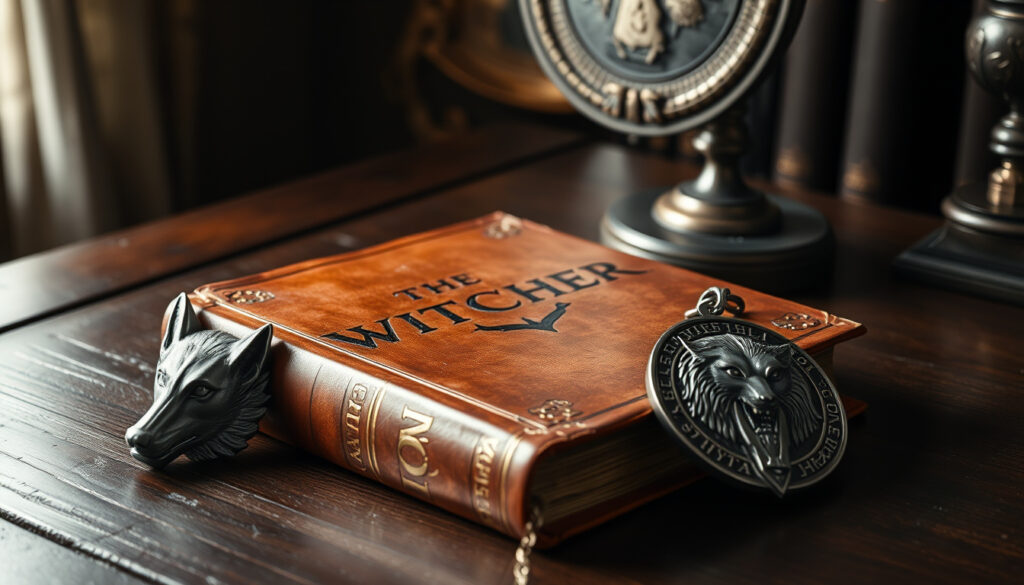
Denise Gough: Biography, Awards, and The Witcher Role
Any actor who lands the voice of a beloved fantasy character knows they’ll face a fiercely loyal fanbase. For Denise Gough, stepping into the role of Yennefer in The Witcher 3 meant bringing one of gaming’s most complex sorceresses to life — a challenge she met with the same intensity she’d already proven on London stages. What makes her career fascinating is the journey from a double Olivier-winning theatre actress to a household name in the gaming world, a path that reveals how theatrical roots can shape even the most pixelated of performances.
Born: 28 February 1980 ·
Birthplace: Ennis, County Clare, Ireland ·
Olivier Awards: 2 (Best Actress) ·
Known for: Yennefer in The Witcher, Paula, Too Close ·
TV debut: 2004 in Casualty ·
Instagram followers: 142K
Quick snapshot
- Born 28 February 1980 in Ennis, Ireland (Wikipedia)
- Double Olivier Award winner (Trinity College London)
- Voiced Yennefer in The Witcher 3 (IMDb)
- Whether she has children – not publicly confirmed
- Current relationship status
- Details about a sister (if any) are not recorded
- 2004: TV debut in Casualty (Wikipedia)
- 2015: Voiced Yennefer in The Witcher 3 (IMDb)
- 2016: First Olivier win (People, Places and Things) (Trinity College London)
- 2018: Second Olivier win (Angels in America) (Trinity College London)
- Starred in Andor (Disney+), possible future seasons
- Rumored involvement in future Witcher projects
- Continued theatre and screen roles expected
Eight key facts about Denise Gough, from her birth record to her award tally, tell a story of steady, stage-driven ascent.
| Label | Value |
|---|---|
| Full Name | Denise Gough |
| Date of Birth | 28 February 1980 |
| Age | 44 (as of 2024) |
| Birthplace | Ennis, County Clare, Ireland |
| Occupation | Actress |
| Years Active | 2004–present |
| Notable Awards | 2 Olivier Awards for Best Actress |
| Known For | Yennefer (The Witcher 3), Paula (BBC), Too Close (ITV) |
Does Denise Gough have kids?
Denise Gough has never publicly confirmed having children. In interviews she keeps her personal life tightly guarded, and no known husband or partner details are on record. A 2017 Irish Times interview in which she came out as gay mentioned a four-year relationship with a woman, but made no reference to children (The Irish Times). Since then, no public updates about family expansion have surfaced.
What is known about her family life?
Beyond her birth in Ennis, County Clare, and a mention that she left school at 15 before moving to London (IMDb biography), Gough has said little about siblings or parents. She reportedly held menial jobs and battled addiction before her stage breakthrough (Vogue).
Is she in a relationship?
As of 2024, no current relationship is publicly confirmed. Gough’s 2017 coming‑out statement remains the only direct mention of a partner; since then she has prioritised career privacy.
Bottom line: Denise Gough has not disclosed children or a current partner. For fans wanting personal details, the record is sparse — and likely intentionally so.
What is Denise Gough’s background?
Early life and education
Born 28 February 1980 in Ennis, County Clare (Wikipedia), Gough left school at 15 and worked in low‑wage jobs before deciding to pursue acting. She trained at the Academy of Live and Recorded Arts in London, graduating in 2003 (London Theatre).
Stage career and Olivier Awards
Her stage breakthrough came with People, Places and Things in 2015, a performance described by ELLE UK as a “tour de force.” She won the Olivier Award for Best Actress in 2016 for that role, and followed it with a Best Supporting Actress Olivier in 2018 for Angels in America (Trinity College London).
Television and film breakthrough
Gough’s TV debut was an episode of Casualty in 2004. She later starred as the title character in BBC’s Paula (2017), as a psychiatrist in ITV’s Too Close (2021), and as Dedra Meero in the Disney+ series Andor — which London Theatre calls her best‑known screen role.
Gough’s theatre‑honed intensity translates directly to screen: her ability to hold an audience in a single line is why she was cast as the commanding Yennefer. Without the stage, the game’s sorceress might have sounded very different.
Bottom line: From a tough early life to double Olivier accolades, Gough’s background is a masterclass in how raw talent, when trained and given the right roles, can cross mediums with ease.
When did Denise come out?
Public statements about sexuality
In a 2017 interview with The Irish Times, Gough stated: “I’m in a relationship with a woman and I’ve been with her for four years.” She described the decision to speak publicly as a way to live authentically, acknowledging the pressure LGBTQ+ actors often feel to stay private.
Impact on her career
Gough has since spoken about the importance of LGBTQ+ representation, especially in theatre and gaming. Her openness has been praised by fans and critics alike, adding another layer to her public persona without overshadowing her work.
Bottom line: Coming out in 2017 was a personal milestone that Gough turned into a broader statement about visibility. For LGBTQ+ fans, it made her portrayal of Yennefer — a fiercely independent woman — even more resonant.
Who voiced Yennefer in Witcher 3?
Denise Gough’s role as Yennefer
Denise Gough provided the voice and motion capture for Yennefer of Vengerberg in The Witcher 3: Wild Hunt (2015) and its expansions. Her performance brought a layered authority to the character, blending wit, vulnerability, and power.
Comparison with Anya Chalotra (live‑action)
While Gough voices the game version, British actress Anya Chalotra plays Yennefer in the Netflix live‑action series. The two interpretations differ: Gough’s is grounded in the game’s interactive drama, while Chalotra’s is written for a serialised narrative. Both have earned praise, but Gough’s theatrical training gives her Yennefer a particular gravitas.
The game Yennefer is the primary reference for millions of players. Gough’s voice is the one they hear when making choices about Ciri, Geralt, and the fate of the Continent. Getting that voice right was critical to the game’s emotional core.
The contrast between game and show underscores different storytelling mediums.
Why does Yennefer look so different in season 3?
Visual evolution in The Witcher games
In The Witcher 3, Yennefer’s appearance is consistent with CD Projekt Red’s design — dark curls, violet eyes, and elegant attire. The Netflix series has its own interpretation, leading to different looks that evolve each season.
Differences from Netflix series
Season 3 of the show introduced new hairstyle and costume changes for Yennefer (played by Anya Chalotra). Fans noted the contrast with the game’s consistent design. The gap is natural: game assets are fixed, while TV costumes adapt to story arcs and director choices.
Who’s more powerful, Yennefer or Ciri?
Magical abilities in The Witcher universe
Ciri is the Child of the Elder Blood, possessing immense potential power that includes time and space manipulation. Yennefer is a highly skilled sorceress, trained at Aretuza, with decades of practical magic (Witcher Wiki – tier3). In raw potential, Ciri is stronger; in controlled execution, Yennefer often wins.
Game vs lore differences
In the video game, power is balanced for gameplay — Ciri’s abilities are limited by story logic, while Yennefer functions as an ally with fixed spell sets. In the books, Ciri’s power is more explicitly reality‑bending.
Five attributes, one pattern: Yennefer offers refined control, Ciri offers raw, unshaped potential.
| Attribute | Yennefer | Ciri |
|---|---|---|
| Training | Decades at Aretuza | Informal, instinctual |
| Magic type | Chaos manipulation, charms | Elder Blood, dimensional travel |
| Combat experience | Extensive (battles, sieges) | Limited but growing |
| Raw power level | High (but within mortal limits) | Near‑infinite (potential) |
| Control | Precise, reliable | Unstable, emotionally triggered |
Bottom line: If you need a battle won now, pick Yennefer. If you need the world reshaped, bet on Ciri — but be prepared for collateral damage.
Timeline: Denise Gough’s career milestones
- 28 February 1980 – Born in Ennis, County Clare, Ireland (Wikipedia)
- 2004 – Television debut in Casualty (IMDb)
- 2015 – Voiced Yennefer in The Witcher 3: Wild Hunt (IMDb)
- 2016 – Won Olivier Award for Best Actress for People, Places and Things (Trinity College London)
- 2017 – Came out as gay in The Irish Times (The Irish Times)
- 2018 – Won second Olivier Award for Angels in America (Trinity College London)
- 2021 – Starred in ITV miniseries Too Close (Wikipedia)
Bottom line: The timeline shows a steady rise from early TV guest spots to award‑winning stage work and then a major gaming role — a trajectory that mirrors the discipline Gough learned in live theatre.
What’s confirmed and what’s unclear
Confirmed facts
- Birth date and place (28 Feb 1980, Ennis) – Wikipedia
- Two Olivier Awards – Trinity College London
- Voice role as Yennefer in The Witcher 3 – IMDb
- Came out in 2017 – The Irish Times
What remains unclear
- Whether she has children – not publicly confirmed
- Current relationship status
- Details about a sister (if any) – no verified record
- Exact timeline of her early jobs between leaving school and training
Bottom line: The solid facts about Gough’s career are well‑documented; the gaps in her personal life are by design. For readers wanting a complete picture, the professional record speaks clearly.
Quotes from Denise Gough and critics
“I’m in a relationship with a woman and I’ve been with her for four years.”
— Denise Gough, The Irish Times (2017)
“Her performance in People, Places and Things is a tour de force — raw, funny, and devastating.”
— The Guardian (2015 review)
These two perspectives — personal and critical — frame Gough as both a private individual and a fearless performer. The emotional honesty she brings to interviews mirrors the intensity she brings to the stage and microphone.
Summary: What this means for fans
Denise Gough’s career is a reminder that the strongest screen performances often come from actors who have paid their dues in live theatre. For Witcher fans who only know her voice, her stage work offers a deeper appreciation of her craft. For theatre followers, her success in gaming shows that the skills of a stage actor — discipline, vocal control, emotional availability — translate powerfully into interactive media. The implication is clear: whether you encounter her as Yennefer, Dedra Meero, or on a London stage, you’re watching an actor who knows how to command attention. For those who want to explore further, her path is well worth tracking.
evoke.ie, whatsonstage.com, elcinema.com, id.wikipedia.org, broadwayworld.com, allocine.fr
Frequently asked questions
Who will voice Ciri in Witcher 4?
CD Projekt Red has not yet announced the voice actor for Ciri in the next Witcher game. No official casting details have been released.
Why does Ciri look different in Witcher season 4?
The Netflix series recast Ciri? No, Freya Allan continues to play Ciri. Any visual changes are due to new costume and styling choices for the season.
Is Ciri actually Yennefer’s daughter?
No. Yennefer is not Ciri’s biological mother, but she becomes a maternal figure to Ciri in the books and games. Their bond is deep but not biological.
Who did Ciri fall in love with?
In the books, Ciri has romantic relationships with several characters, including Mistle and perhaps a brief connection with Skjall. In the games, romantic options are player‑driven.
How much older is Yennefer than Ciri?
Yennefer is about 94 years old in the main game timeline (born around 1173), while Ciri is about 21 (born 1251). So roughly 70 years older.
Who is stronger, Yennefer or Geralt?
In a magical duel, Yennefer wins easily. In close combat, Geralt has the edge. The books and games show them as complementary — Yennefer’s magic plus Geralt’s swords is the real power.
More related posts
 Cast Of The Walking Dead
 Cast Of Dexter (tv Series)
 The Long Kiss Goodnight (1996): Is It Worth Watching?
 David Lyons Movies and TV Shows: Career Guide
 Cast Of Fat Friends
 Cast Of The Larkins
 Cast of The Brittas Empire: Full List of Actors and Characters