Le Creuset Shallow Casserole: Uses, Benefits, and Buying Guide
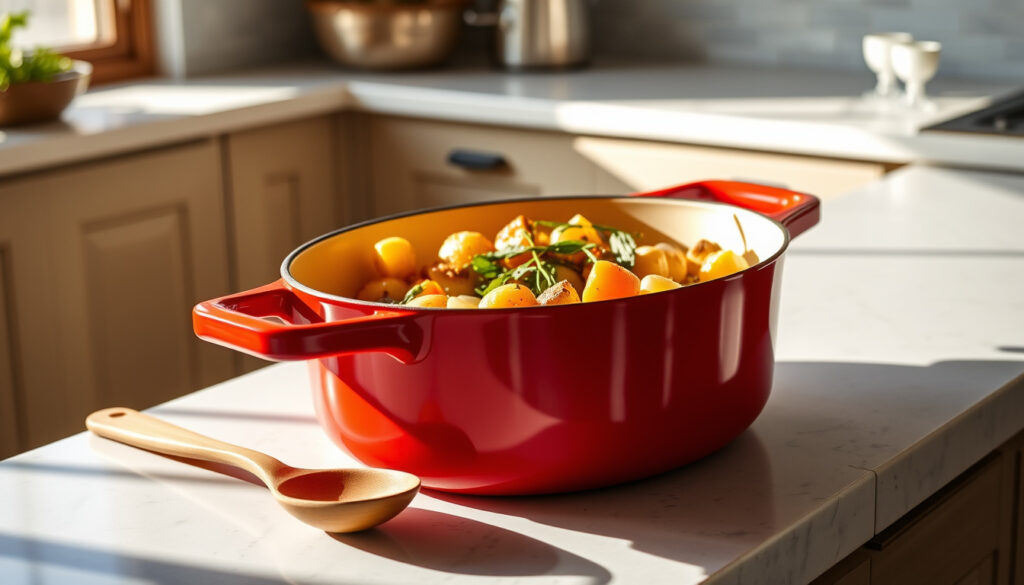
If you’ve ever stood in a kitchen shop trying to decide between a shallow casserole and a deep round one, you already know the choice comes down to how you actually cook. The Le Creuset shallow casserole — sometimes called a braiser — swaps tall walls for a wide, flat base, which changes what it does well. With a 30 cm model weighing about 4.5 kg and costing anywhere from €192.50 to €439.00 depending on size and finish, this guide looks at whether the investment holds up over years of use.
Material: Enameled cast iron ·
Sizes Available: 26 cm, 30 cm, 32 cm ·
Price Range (Le Creuset IE): €192.50 – €439.00 ·
Heat Retention: Excellent (even distribution) ·
Typical Weight (30 cm): approx. 4.5 kg
Quick snapshot
- Made in France from enameled cast iron (Le Creuset UK size guide)
- Oven safe up to 260°C (Le Creuset UK)
- Available in 26 cm, 30 cm, and 32 cm diameters (Le Creuset UK)
- Lifetime warranty covers manufacturing defects (Le Creuset UK)
- Exact weight varies slightly by size and colour
- Optimal size depends on household needs (subjective)
- Future price trends are not predictable
- No major design changes signalled for 2025; current line remains stable
- Expect seasonal colour releases from Le Creuset in 2025
The comparison table below shows how the shallow casserole stacks up against the traditional round version.
| Feature | Shallow casserole | Round casserole |
|---|---|---|
| Shape | Wide, flat base, low sides | Tall straight walls, smaller base |
| Best for | Searing, browning, shallow braises, baking | Large batches, soups, deep braises, stocks |
| Surface area | Large – allows single-layer browning | Moderate – more depth per volume |
| Volume (30 cm) | 3.5 L | 5–6 L typical for round |
| Weight (30 cm) | ~4.5 kg | ~5.4 kg (round) |
The pattern: choose the shallow casserole if browning matters most; pick round for liquid-heavy cooking.
| Specification | Value |
|---|---|
| Material | Enameled cast iron |
| Available diameters | 26 cm, 30 cm, 32 cm |
| Weight (30 cm) | 4.5 kg |
| Oven safe temperature | 260°C |
| Warranty | Lifetime (manufacturing defects) |
| Country of origin | France |
What is a Le Creuset shallow casserole?
The shallow casserole is essentially a braiser with a wide, flat base and low sides — a shape that prioritises surface area over volume. Le Creuset UK (official casserole size guide) explains that this design makes it easier to sear and brown food without overcrowding, because heat reaches more of the pan’s surface.
What sizes are available?
- 22 cm: 1.4 litres, serves 1–2 people (Wedding Present Co. size guide)
- 26 cm: 2.2 litres, serves about 2–4 people (Wedding Present Co. size guide)
- 30 cm: 3.5 litres, serves 4–6 people (Wedding Present Co. size guide)
The 30 cm model is the most popular choice for families, balancing capacity with manageable weight. Le Creuset UK suggests a household of four should aim for at least 4 litres total capacity across their cookware set, which means pairing the shallow casserole with a deeper round or oval casserole for larger batches.
How does it differ from a traditional casserole?
A traditional round casserole has tall, straight walls and a smaller base relative to its volume. Le Creuset UK notes the round casserole is designed to match the burner shape for consistent heat and to hold lots of ingredients and liquids. The shallow version swaps that tall shape for a wide, low profile — better for browning, but less suited to deep braises with copious liquid.
You trade total volume for cooking surface. That’s useful for searing six chicken thighs without steaming them, but a round casserole will hold more stew for a crowd.
The implication: if you regularly brown meat or vegetables in batches before simmering, the shallow casserole cuts down on cooking time. If you mostly make big batches of soup or stock, a round casserole might serve you better.
What is Le Creuset shallow casserole good for?
The shallow casserole excels at tasks that benefit from a large heated surface and moderate depth. Prezola’s Le Creuset size guide describes the shallow shape as enhancing caramelisation for browning meat and vegetables, simmering casseroles, and stir-frying. Le Creuset UK lists typical uses as searing, braising, baking, and side dishes.
“The large flat shape and shallow sides make it perfect for browning meat and vegetables, simmering casseroles, stir-fries and more.” – Prezola Le Creuset size guide
Browning meats and vegetables
Because the base is wide and heat spreads evenly across the enameled cast iron, you can brown multiple pieces of meat in a single layer. Le Creuset UK highlights that the shallow sides prevent overcrowding, which is the main reason home cooks end up steaming instead of searing.
Simmering stews and braises
Once the meat is browned, the shallow casserole handles moderate braises and stews well — the wide surface allows liquid to reduce faster than a deep pot would. Le Creuset UK recommends it for recipes where you want some evaporation and concentration of flavours.
Baking bread or casseroles
The entire pan is oven safe up to 260°C, which makes it suitable for baking no-knead bread, frittatas, or shallow pasta bakes. The tight-fitting lid traps steam for crust formation, similar to a Dutch oven.
What makes Le Creuset shallow casseroles special?
Le Creuset has been making enameled cast iron in France since 1925. The shallow casserole shares the same core construction: a cast iron body coated with a vitreous enamel finish that resists staining, chipping, and rusting when handled correctly.
“The shallow casserole is hand-crafted in France from enameled cast iron, offering even heat distribution and a non-reactive surface that handles acidic ingredients like tomatoes or wine without reacting.” – Le Creuset official product description
Enameled interior resists staining and chipping
Unlike bare cast iron, the enameled interior does not require seasoning and can handle acidic ingredients like tomatoes or wine without reacting. Le Creuset UK confirms the interior is designed for easy cleaning and long-term durability.
Even heat distribution
Cast iron distributes heat more evenly than stainless steel or aluminium, and the enamel layer adds a non-reactive surface. Le Creuset UK notes this consistency helps prevent hot spots that can burn food.
Signature tight-fitting lid
The lid seals tightly to circulate moisture and heat, which is useful for braising. The lid’s weight also helps press down on food for even contact with the pan surface.
What this means: the shallow casserole is not just a different shape — it is engineered for a specific cooking style. If you often cook recipes that start with a good sear and finish in the oven, it is a natural fit.
What to cook in a shallow Le Creuset?
The wide base and moderate depth suit recipes that benefit from surface contact and moderate liquid. Prezola’s guide calls out paella, pasta bakes, and one-pot meals as ideal candidates.
Chicken thighs with vegetables
- Sear thighs skin-side down in batches until golden
- Add aromatics and vegetables, then braise with a splash of stock
- Finish in the oven at 180°C for 20–30 minutes
Coq au vin
- Brown chicken pieces in the shallow casserole
- Deglaze with red wine and add mushrooms, pearl onions
- Simmer on the stovetop or bake with the lid on
Paella
- The wide base lets rice cook evenly in a thin layer
- Brown chorizo and chicken first, then add rice and stock
- Cook uncovered to develop a crispy bottom (socarrat)
Frittatas
- Cook fillings on the stovetop, pour in beaten eggs
- Transfer to the oven to finish under the grill
Acidic ingredients like wine and tomatoes are safe in enameled cast iron, but prolonged simmering at very high heat can eventually dull the interior finish over years. Stick to medium heat for long cooks.
The catch: versatility comes with limits. The shallow casserole shines for searing and moderate braises, but it is not a soup pot.
What is the disadvantage of Le Creuset?
No piece of cookware is perfect. The shallow casserole comes with three trade-offs that matter in everyday use.
Weight and handling
A 30 cm shallow casserole weighs about 4.5 kg empty. Lifting it when full of food — say a whole chicken and vegetables — can exceed 7 kg. That is heavier than stainless steel or non-stick alternatives.
Price
At retail prices ranging from €192.50 to €439.00 on the Le Creuset Ireland official store, the shallow casserole is an upfront investment. However, the brand’s lifetime warranty against manufacturing defects means replacement is unlikely if cared for normally.
Care requirements
- Hand wash recommended; dishwasher use can dull the enamel over time
- Avoid metal utensils that can scratch the enamel surface
- Do not heat an empty pan on high, as thermal shock can crack the enamel
The weight is a real issue for anyone with wrist or strength limitations. The price is high, but the cost per use over a potential 20-year lifespan drops to roughly €10–€22 per year depending on the model.
The pattern: trade-offs are manageable if your cooking style matches the tool. For those who need lightweight cookware, the shallow casserole is not the answer.
Pros
- Excellent heat retention and distribution
- Versatile: stovetop to oven, all cooktops including induction
- Durable enamel interior resists staining and chipping
- Lifetime warranty against manufacturing defects
- Retains high resale value
Cons
- Heavy: 4.5 kg empty, heavier when full
- High upfront cost (€192.50–€439.00)
- Requires hand washing; no dishwasher
- Enamel can chip if dropped or heated empty
- Not ideal for large batches of soup or stock
Is a shallow casserole dish worth the money?
The value question depends on how often you cook in a way that matches the shallow casserole’s strengths.
Cost per use over lifetime
If you cook with the shallow casserole twice a week for 10 years, that is roughly 1,040 uses. At the median price of €300, each use costs about €0.29. Stainless steel pans at a third of the price might last 5–8 years before warping or losing non-stick properties.
Comparison with other braisers
Staub and Lodge also make enameled cast iron braisers. Le Creuset UK points out that its shallow casserole is hand-crafted in France, while many competitors manufacture in China. The difference matters to buyers who value origin and heritage, though cooking performance between reputable brands is similar.
Resale value
Le Creuset retains resale value better than most cookware. A used shallow casserole in good condition commonly sells for 50–70% of retail on resale platforms, which reduces the effective cost of ownership.
The pattern: the shallow casserole is not cheaper than alternatives upfront, but its lifespan and resale value bring the effective cost below many mid-range pans that need replacing every few years.
marthasfoodandhome.com, reddit.com, facebook.com, youtube.com
If you’re considering a shallow casserole, you might also find value in this comprehensive Le Creuset Dutch oven guide that covers sizing and care tips for similar cookware.
Frequently asked questions
Which Le Creuset did Meghan Markle use?
Meghan Markle was reported to own a Le Creuset shallow casserole in the colour ‘Cassis’ (a deep purple shade). While the exact size is not confirmed, the 30 cm model is widely speculated based on her cooking segments.
What are the three things you shouldn’t cook in a cast iron pan?
Acidic foods for very long periods (like all-day tomato sauce), delicate fish that sticks easily, and eggs (which tend to bond with the surface). However, the enameled interior of Le Creuset handles acidic foods better than bare cast iron.
How do I clean a Le Creuset shallow casserole?
Let the pan cool, then wash with warm soapy water and a soft sponge. Avoid abrasive scouring pads and dishwasher cycles. For stubborn food residue, soak with baking soda paste for 15 minutes before scrubbing.
Can I use metal utensils on Le Creuset enamel?
Le Creuset recommends against metal utensils as they can scratch the enamel finish. Use silicone, wood, or plastic utensils to preserve the surface.
Is the shallow casserole the same as a braiser?
Yes, the terms are used interchangeably. Le Creuset markets the product as a ‘Signature Shallow Casserole’ in the UK and Ireland, but many retailers and home cooks call it a braiser because of its low, wide shape designed for browning and braising.
What colors are available for the shallow casserole?
Le Creuset offers the shallow casserole in a wide range of colours including Cerise (red), Marseille (blue), Flint (grey), Artichaut (green), Chambray (light blue), and seasonal limited editions. Colour availability varies by size and retailer.
For the home cook in Ireland who sears chicken thighs twice a week and bakes a bread loaf on Sundays, the shallow casserole is a decade-long partner that earns its cost per use. The alternative — buying a cheaper braiser every five years — means handling lighter weight and accepting eventual warping, or sticking with a deep round casserole that trades browning surface for liquid volume.
More related posts
 Cast Of Knives Out
 50 Inch TV Bracket Guide: Mounting, Height, and Wall Types
 Cast Of Despicable Me 4
 Arcane Cast: Complete Voice Actor Guide
 Cast of Coneheads (1993): Full List, Roles, and Where They Are Now
 Cast Of Top Boy: Summerhouse
 Matthew Perry Born: Biography, Age, Death, and Legacy
 Great Movies TV Guide: Schedule, Channels & Free Viewing