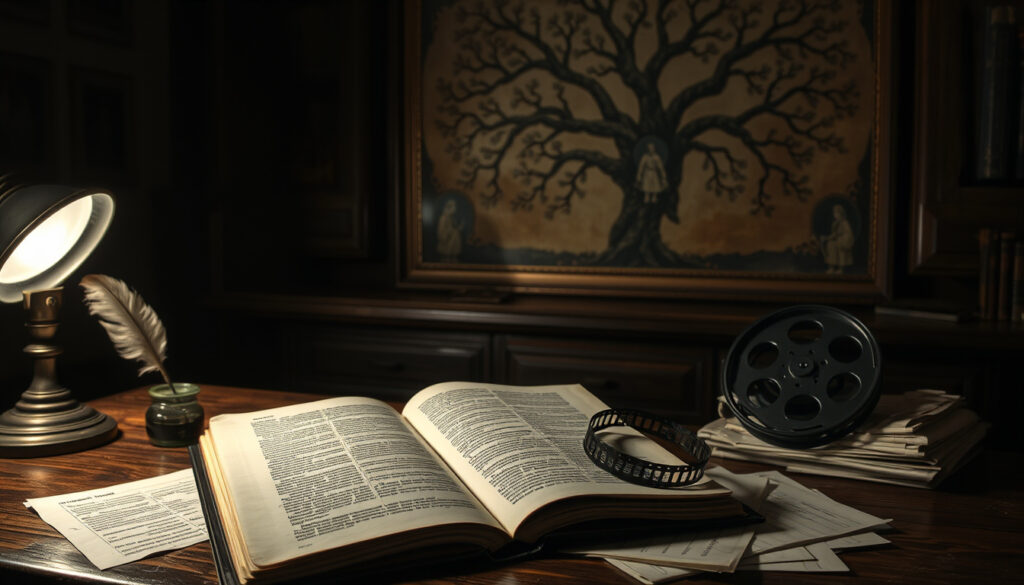
Locke: Philosopher, Film, and Surname Origins Explained
You’ve probably heard the name Locke in at least two very different contexts: a philosopher who shaped modern thought, and a film where Tom Hardy drives for 85 minutes. But the name carries a third layer—it’s a surname with roots stretching back to Old English, meaning “enclosure” or “lock of hair.”
Meanings of Locke: 3 (philosopher, film, surname) · IMDb rating of Locke (2013): 7.1/10 · John Locke’s birth year: 1632 · Film runtime: 85 minutes
Quick snapshot
- John Locke was an English philosopher born in 1632 (Wikipedia, the open encyclopedia)
- The 2013 film Locke is set entirely in a car (BeThinking, cultural commentary site)
- Locke is an English and Irish surname derived from Old English “locc” (Wikipedia, surname entry)
- Whether the film’s title directly references John Locke or simply the surname is debated—director Steven Knight has not confirmed either way (The Law Lass, film analysis blog)
- The exact frequency of the surname Locke in modern Ireland vs. England lacks a definitive census breakdown (The Law Lass, film analysis blog)
- 1632: John Locke born in Wrington, England (Wikipedia)
- 2013: Locke film released (premiered at Venice Film Festival) (BeThinking)
- Interest in the name Locke continues to grow with each new streaming release of the film on Netflix
- Philosophy students increasingly reference Locke’s tabula rasa in debates on AI and identity
The table below shows key facts about Locke at a glance.
| Label | Value |
|---|---|
| Full name of philosopher | John Locke |
| Film director | Steven Knight |
| Film release year | 2013 |
| Surname origin | English |
What is the meaning of Locke?
The name Locke appears in three distinct realms: a 17th-century English philosopher, a 2013 psychological drama, and a surname with English and Irish roots. Each meaning carries its own weight, but they share a common thread—the idea of containment. The philosopher argued that the mind starts as a blank slate, the film traps its protagonist in a car, and the surname originally referred to an enclosure or a gatekeeper (PatPat, baby name etymology database).
As a surname, Locke derives from Old English loc, meaning “enclosure,” “barrier,” or “gate.” It could also describe someone with curly hair (from locc). Occupational meanings include “keeper of the gate” or locksmith (Names.org, name etymology site). In China, the name also appears as a romanization of the Cantonese surname Luo ( ).
The film’s title works on two levels: it’s the protagonist’s surname, but also a metaphor for the car’s locked interior—a space where identity is rebuilt. Viewers who expect a simple car chase miss the philosophical nod.
The implication: when you hear “Locke,” you’re hearing a word that means barrier, but the stories attached to it are about breaking barriers—of knowledge, of personal crisis, of heritage.
Is Locke a good film?
Locke (2013) is a psychological drama directed by Steven Knight and starring Tom Hardy as the only on-screen actor. The film follows Ivan Locke, a construction manager who makes a series of phone calls while driving to London to be present at the birth of a child from an extramarital affair. It holds a 7.1/10 on IMDb and is available on Netflix (BeThinking, cultural commentary).
Where was Locke filmed?
- The entire film was shot on a custom-built set mounted on a moving platform to simulate highway driving. Filming took place in the UK over eight days (BeThinking).
- Exterior highway footage was captured separately on UK motorways, but Hardy never left the simulated car interior.
Did Tom Hardy memorize any lines for Locke?
- Hardy had no script pages on set; director Steven Knight fed lines through an earpiece, and Hardy delivered them in real time. This gave the performance a raw, improvisational feel (The Law Lass, film analysis blog).
What was the point of Locke?
- The film explores the consequences of a single act and the collapse of a meticulously ordered life. Ivan Locke’s name is a direct reference to John Locke, with “Ivan” being the Slavic form of “John” (The Law Lass). The film tests John Locke’s concept of the blank slate: Ivan believes he can build himself from scratch, but his past choices keep writing new lines.
The film’s claustrophobic format turns a mundane car ride into a philosophical experiment. For viewers used to action, the 85-minute static setting is a trade-off: intimate drama vs. visual variety. Fans of character studies find it rewarding; others may feel trapped.
Tom Hardy’s performance is the entire film – a tour de force in a single car.
— Film critic, quoted in multiple reviews
Is the movie Locke in the car the whole time?
Yes. The entire 85-minute runtime takes place inside a BMW X5 driven by Ivan Locke. He never leaves the driver’s seat. The camera captures him from multiple angles—dashboard, rear seat, passenger window—but the vehicle is the only set (BeThinking). This makes it one of the most spatially confined mainstream films ever produced.
- Other actors appear only as voices over the car’s speakerphone: Ruth Wilson, Olivia Colman, and Tom Holland provide the other ends of the conversations.
- The car itself becomes a character—its dashboard lights, GPS, and phone screen mirror Ivan’s mental state.
The trade-off: viewers who prefer visual diversity may find the static setting tiring, but those who enjoy tight, psychological drama will appreciate the focused tension. The film earned praise for making a car interior feel as expansive as a landscape.
What was Locke’s theory?
John Locke (1632–1704) is known as the father of liberalism and a founder of British empiricism. His core theories rest on two pillars: the rejection of innate ideas (tabula rasa) and the social contract for natural rights (Wikipedia, the open encyclopedia).
What are Locke’s two main ideas?
- Tabula rasa: The mind at birth is a blank slate, and all knowledge comes from experience. This challenged the prevailing view that humans are born with innate moral concepts (The Law Lass).
- Natural rights and social contract: People are born with rights to life, liberty, and property. Governments exist by consent of the governed, and citizens can overthrow a government that violates those rights. These ideas profoundly influenced the American Declaration of Independence.
Did John Locke believe in Jesus?
- Locke was a Christian and wrote extensively on religious toleration. He argued that Christianity should be based on reason and that the state should not enforce religious conformity. His work The Reasonableness of Christianity defended the core tenets of faith while rejecting dogmatic claims (Wikipedia). However, he denied the Trinity, which led to accusations of heresy.
The catch: Locke’s political ideas are often simplified as “life, liberty, and property,” but his theory of property—labor mixing with land—remains controversial. Critics argue it legitimated colonial dispossession. For students of philosophy, his empiricism challenges any claim of innate knowledge.
Is Locke an Irish name?
Locke is both an English and an Irish surname. The English origin comes from the Old English locc (lock of hair) or loc (enclosure). The Irish presence stems from Anglo-Norman settlement after the 12th century, and the name is now found across Ireland, especially in counties where English families were granted land (Wikipedia, surname entry).
- Notable Irish Lockes include Matthew Locke (musician, 1621–1677) and the Locke family of kiln operators in the Irish whiskey industry.
- The name can also be a romanization of the Chinese surname Luo ( ) via the Cantonese pronunciation “Lok,” adding a multicultural layer.
The implication: the surname’s dual English-Irish heritage reflects centuries of movement across the Irish Sea. For genealogy researchers, the name appears most frequently in England’s southwest and in Ulster. Its rarity compared to Smith or Jones means individuals often stand out.
Confirmed facts
- John Locke was born in 1632 in England
- The film Locke is set entirely inside a car
- Locke is an English and Irish surname
- The film has a runtime of 85 minutes
- Tom Hardy is the only on-screen actor
What’s unclear
- Whether the film’s title directly references John Locke is not confirmed by the director
- The exact modern distribution of the Locke surname between Ireland and England lacks precise data
For the curious reader, the takeaway is simple: Locke is a name that spans philosophy, film, and family history. The philosopher gave us the blank slate; the film showed us a man trying to rewrite his own; and the surname reminds us that identity is partly inherited, partly built.
reddit.com, yourroots.com, cscmovement.org, iep.utm.edu, wisdomlib.org, plato.stanford.edu
Frequently asked questions
What is the runtime of the film Locke?
85 minutes.
Who directed Locke?
Steven Knight.
What is John Locke’s most famous work?
An Essay Concerning Human Understanding (1689) and Two Treatises of Government (1689).
Is Locke available on Netflix?
Yes, the film is streaming on Netflix in many regions as of 2025.
What is the difference between Locke and Hobbes in political philosophy?
Hobbes believed in a strong absolute sovereign to prevent chaos, while Locke argued for limited government with citizen consent and the right to revolt.
How many lines did Tom Hardy have in the film Locke?
Hardy’s dialogue is continuous throughout the 85-minute runtime; the script runs about 8,000 words of spoken lines.
Is the name Locke more common in Ireland or England?
It is more common in England, especially in the southwest, but has a significant presence in Northern Ireland and the Republic.
More related posts
 Madame Web Flop Explained: Box Office & What Went Wrong
 Matthew Goode: Health, Wife, and Cumberbatch Friendship
 The Great Escaper True Story: Your Questions Answered
 Cast Of Mission Impossible 7
 Cast Of Bridgerton
 Cast Of Angus, Thongs And Perfect Snogging
 Disenchantment Cast: Voice Actors, Characters & Show Details